
If your air fryer is smoking, the usual cause is grease, oil, crumbs, seasoning, or food particles getting hot enough to burn. This can happen with a countertop air fryer or with an oven’s air-fry mode. Both use high heat and fast-moving air, so small amounts of grease and loose food can turn into smoke quickly.
A brief amount of cooking smoke can happen with especially fatty food. Stop using the appliance if it smokes while empty, smells electrical or like melting plastic, shows sparks or flames, or keeps smoking after accessible grease has been cleaned.
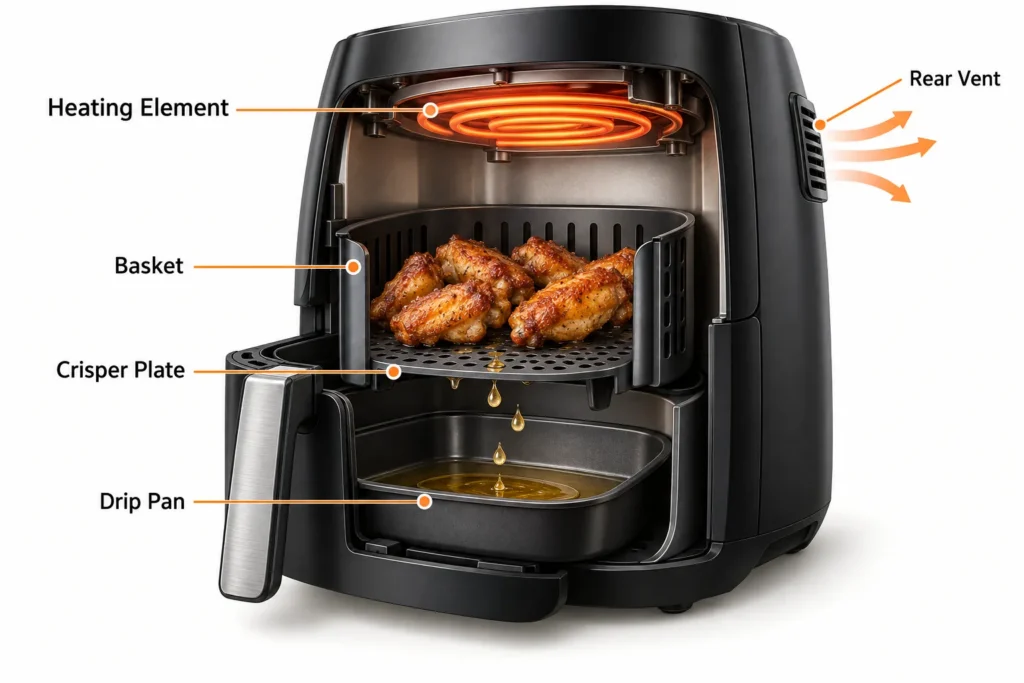
First: Is It Smoke or Steam?
Moist food, including zucchini and frozen food, can create a white cloud as water cooks off. Steam should not smell burnt and usually fades as surface moisture cooks away. Smoke is more likely to smell like hot oil, burnt crumbs, charred sugar, or grease. If you cannot identify a food-related cause, do not assume the vapor is harmless steam.
The Most Common Reasons an Air Fryer Smokes
1. Grease from fatty food is burning
Bacon, sausage, burgers, chicken wings, chicken thighs with skin, and other fatty foods release drippings as they cook. In an air fryer, the moving air can also splatter that grease. When it reaches a very hot tray, drawer, heating area, or old residue, it can smoke.
For an oven air-fry mode, follow the rack and catch-pan setup in your model’s manual. Some LG oven manuals, for example, call for a foil-lined baking pan on a lower rack to catch drips and note that skin-on chicken can produce smoke as fat renders. Countertop machines have different basket and drawer designs, so do not copy an oven setup into a countertop model.
For temperature checks and smoke-control tips when cooking fatty beef, see our air fryer beef cooking times and temperatures guide.
2. Old oil, crumbs, or food residue are still inside
Even if the basket looks clean, grease can remain in the drawer, drip tray, corners, or accessible interior surfaces. Let the appliance cool, unplug it, and clean only the areas the manual says are user-serviceable. Do not pour water into electrical areas or disassemble the appliance.
For a safe setup and cleanup routine, read how to use and clean an air fryer for the first time.
3. The oil is not suited to the heat
Every cooking oil has a smoke point: the temperature at which it starts to smoke. High-temperature air frying can push an unsuitable oil past that point, particularly if the oil is old or has already been heated repeatedly.
Choose oil by its listed smoke point and intended use, not by its color. In general, more refined oils tend to have higher smoke points, but color alone is not a reliable test. Use a light coating rather than pooling oil in the basket or tray. If oil starts smoking, discard it rather than using it again.
Common Cooking Oil Smoke Points for Air Frying
| Cooking Oil | Approximate Smoke Point | Best for Air Frying? |
|---|---|---|
| Avocado oil | Up to 520°F (271°C) | Highly recommended for high-heat cooking |
| Canola oil | 400°F–450°F (204°C–232°C) | Recommended |
| Extra-virgin olive oil | About 350°F–410°F (177°C–210°C) | Better for moderate heat; check the recipe temperature |
| Butter or unrefined coconut oil | About 350°F (177°C) | Usually not ideal for high-heat air frying |
Smoke points are approximate and vary by refinement, brand, age, and food residue. Check the label for your specific oil and avoid using oil after it begins to smoke.
4. Sugary sauces, rubs, marinades, or breading are charring
Barbecue sauce, hot honey, sweet glazes, and sugar-heavy rubs can darken and burn before the food is finished. Homemade breading can also shed small particles that circulate in the hot airflow and char.
For foods with a sweet sauce, cook with a lighter coating first and brush on the sauce near the end, if the recipe and your appliance instructions allow it. Check breaded food early. If crumbs are rapidly darkening, lower the temperature and add time rather than leaving the food at a setting that is producing smoke.
5. The temperature is too high or the basket is overcrowded
Crowding can trap grease and moisture, cause uneven browning, and send loose particles toward hot surfaces. Arrange food in an even layer and cook in batches when needed. If you lower the temperature, extend cooking time as needed and use a thermometer: poultry should reach 165°F (74°C) in the thickest part.
When you adjust heat or batch size, compare the change with an air fryer cooking times guide rather than relying on a single setting.
6. Your oven’s air-fry mode needs better drip control and ventilation
Oven air fry uses a convection fan and high temperatures in a larger cavity. Use only the manufacturer-approved air-fry tray and prescribed drip-pan placement. Do not cover a whole oven rack with foil or block vents. Turn on the exhaust hood before cooking and keep it running afterward.
How to Stop Your Air Fryer From Smoking
If the smoke is light and clearly tied to food or grease:
- Stop the cycle; if there is no fire, remove food when safe.
- Once cool, remove excess grease and burned crumbs.
- Restart at a lower temperature or with a smaller batch.
- Use the correct drip tray or catch pan and run the exhaust fan.
Check high-fat food partway through only when your manual permits it. Adding water, bread, liners, parchment, or foil is model-specific, not universal advice.
When Smoke Means You Should Stop Using the Appliance
Stop immediately, unplug after it is safe to do so, and allow the appliance to cool if you notice any of the following:
- Smoke with no food or grease source present.
- A sharp electrical, chemical, or melting-plastic odor.
- Sparks, flames, damaged wiring, a warped basket, or melting parts.
- Smoke that remains heavy after a proper clean and a low-grease test.
- A new appliance that continues to smoke beyond an initial manufacturer-directed burn-in or cleaning process.
Consult your model manual and contact the manufacturer or a qualified repair service. Check for product recalls when appropriate. Do not keep testing an appliance that may have an electrical fault.
What If Your Smoke Alarm Goes Off?
Do not remove the battery from your smoke alarm. Open a window or door, use the alarm’s hush feature if available, and clear the cooking vapor safely. A smoke alarm is an important warning device, not something to disable for convenience.
If there is an actual fire in an oven, turn the oven off and keep the door closed. If flames escape the oven or you are unsure you can handle the situation safely, leave the home and call 911. Never throw water on a grease fire.
The Bottom Line
Most air-fryer smoke comes from grease, residue, loose breading, sugary seasoning, or excessive heat. Clean the appliance after it cools, manage drippings, avoid overcrowding, adjust temperature and time, and use your specific model’s approved tray and liner setup. But if smoke is heavy, persistent, or smells electrical or like melting plastic, stop using the appliance and get manufacturer support.
For more practical setup, cleaning, and maintenance advice, browse our air fryer how-to guides.
About the author